You are not too sensitive
Your nervous system is stuck in survival mode
- GZ-psychologist BIG-registered
- 1,100+ accompanied
- Unyte certified
- €250 - $300 - £250
- 5 hours of non-invasive listening therapy - at home, at your pace
- Developed by Dr. Stephen Porges (Polyvagal Theory)
- Filtered music activates the vagus nerve through the middle ear muscles
- From chronic survival mode to rest, safety and recovery
✓ Find out within two minutes if the SSP suits you and how regulated your nervous system is. No obligations, just an interactive questionnaire.
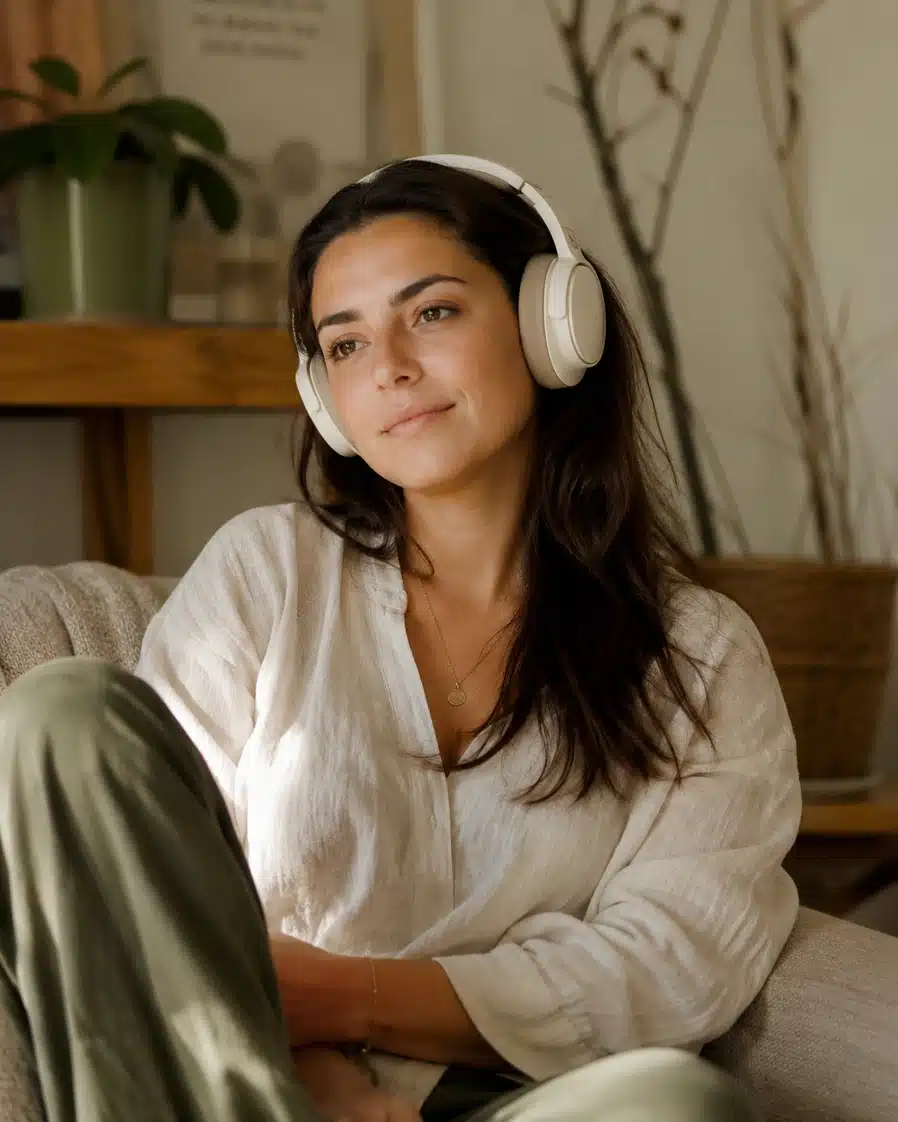
Do you recognize this?
You've tried all sorts of things. Therapy, breathing techniques, exercise, mindfulness. Sometimes it helps for a while. But then you're back to square one.
Your body never really takes a break
Tense. Overexcited. Exhausted. Or just numb. As if your system is permanently on, even when you don't want it to be. Maybe you've begun to think this is just part of you. It isn't.
Talking doesn't always help
Therapy works through your thoughts, through the prefrontal cortex. But when your nervous system is in chronic survival mode, that part goes partially offline. You can understand with your head what's going on. Your body doesn't feel it.
What happens biologically when you've been tense for years
Your autonomic nervous system has one job: survival. It constantly scans for danger. That's not weakness; that's biology. When you have lived under high pressure for a long time due to trauma, stress or overstimulation, your nervous system can get stuck in fight-or-flight mode - or further: in a frozen state of exhaustion and withdrawal.
In that state, real rest is impossible. You sleep, but you don't wake up rested. You want to relax, but your body is still on. No breathing exercise changes that on a biological level.
Who is the SSP suitable for?
The SSP is used in adults, adolescents and children with:
- Anxiety and chronic stress
- PTSD and complex PTSD (C-PTSD).
- Autism spectrum disorder (ASD)
- ADHD and concentration problems
- Sensory hypersensitivity and high sensitivity
- Burnout and overstimulation
- Lung COVID and ME/CFS
- Sleep problems and chronic fatigue
- Social anxiety and attachment problems
- Children with behavioral problems or school dropouts
The SSP does not work through conversation or insight. It works directly on the nervous system, through biology - and reinforces other therapies such as EMDR, somatic work and CBT.
This is what our clients say after their program at SoundTherapy
“The depression I had been struggling with for 10 years has almost completely disappeared. I sleep better and wake up rested, which hadn't happened for over 6 years. I actually feel calm. Not just calm.”
“Sweaty hands, queasy feeling in my stomach in social situations. That's just gone. At work, on public transportation, in restaurants. My friend called me ‘a different person.’”
“After three hours of listening, I saw marked improvements in my son. He is softer, calmer and started asking for hugs. Something that never happened before.”
How does the SSP affect the vagus nerve?
Dr. Stephen Porges discovered something crucial: a dysregulated nervous system does not fix you from above, but from below. Through the body. Through the brain stem. Through biology. We call that a bottom-up approach.
What is a nervous system reset?
The SSP works through specially filtered music that emphasizes the frequencies of a quiet human voice: the range of 500 to 4,000 Hz. This is exactly the sound your nervous system associates with safety.
That music trains the middle ear muscles: the stapedius and tensor tympani. As those muscles get stronger, they send a signal through the brainstem to the ventral vagus - the most evolved branch of the vagus nerve, linked to rest, social connection and recovery.
In short, you listen to music, and your biology does the rest. Without conversations. Without insight. Without willpower.
SSP Connect
The initial phase with unfiltered music. Your nervous system gets used to the program.
SSP Core
The active phase with progressively filtered music. This is where the biological training of the middle ear muscles takes place.
SSP Balance
The integration phase. Your system consolidates the changes and builds stability.
Why you will feel more social too
SSP doesn't just train rest. It also restores your ability to feel safe on others.
Dr. Stephen Porges discovered that our nervous system receives and transmits social security through six linked functions. He called this the Social Engagement System.. With chronic stress or trauma, this system becomes suppressed.
The SSP precisely trains the middle ear muscles you need to distinguish human voices from background noise. As those muscles get stronger, the broader Social Engagement System activates itself automatically. Not by exercise. By biology.
- You understand vocal tones and emotions more easily
- Social situations cost less energy
- You feel safer with others - and with yourself
- Eye contact becomes less overwhelming
- You experience more co-regulation with the people around you
The SSP also enhances other therapies. When the nervous system experiences more regulation, more room is created for EMDR, somatic work and behavioral therapy.
Five hours of listening. A scope that goes much further.
Through the vagus nerve, the SSP reaches virtually every system in your body and mind.
Senses
- Less noise sensitivity
- Improved auditory processing
- Higher stimulus processing
Behavior & emotion
- Better behavioral regulation
- More emotional balance
- Being able to relax more deeply
Connection
- More social and connected
- Better contact with yourself
- More social energy
Safety
- Stronger sense of security
- Neuroception support
- Body and mind at rest
Energy & recovery
- Sleep better
- More energy during the day
- Less chronic fatigue
Synergy
- Amplified EMDR, somatic, CBT
- Improves therapy readiness
- HRV and heart coherence
What are the results of the SSP?
These are clinical outcomes measured via validated measurement instruments in clients who have completed the SSP.
Source: Unyte/iLs practice data 2024
Source: Unyte/iLs practice data 2024
Source: Unyte/iLs practice data 2024
Source: Unyte/iLs practice data 2024
The U.S. Department of Defense awarded nearly $3.8 million in 2024 for a double-blind scientific study of the SSP in PTSD. That is the level of clinical recognition behind this program.
More than 1,100 online SSP programs have now been supervised at BrainArts.
Who accompanies you at SoundTherapy?
Each course is under the clinical supervision of a BIG-registered GZ psychologist.
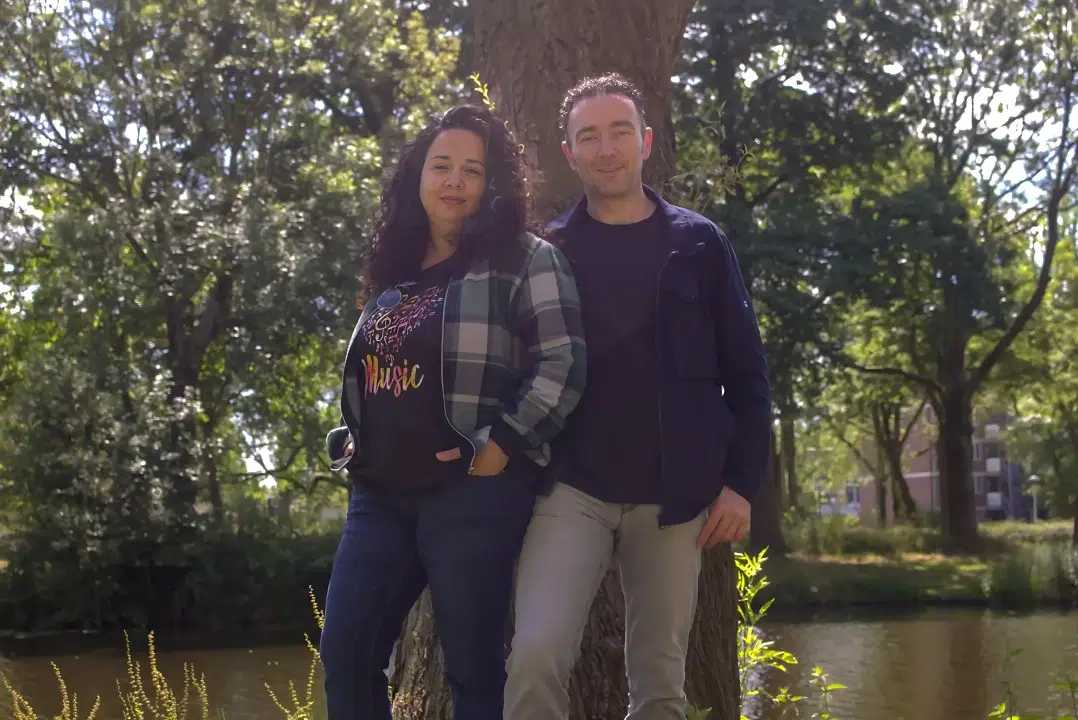
Shahera el Katib
Over 10 years of experience in clinical mental health, including cross-cultural psychiatry and complex trauma treatment. She clinically supervises every SSP program at SoundTherapy.
BIG-registered: 89919609425
William Bolle
Supervised more than 1,100 online SSP programs. Specializing in microdosing and highly sensitive nervous systems. Certified provider through Unyte - the organization working with Dr. Stephen Porges.
What does a SSP program look like with us?
Four steps. No mandatory appointments. Your pace, your rhythm, with personal guidance for an entire year.
Sign up & personal intake
You will receive immediate confirmation and a personalized intake form. Fill it out at your convenience - no rush, no pressure. We will personally read your intake and create your personal listening plan based on it.
- No standard schedule - always customized
- Honest advice if the SSP does not fit
- Money back if we find that during intake
Listening at home via the Unyte app
You download the free app on your phone, tablet or laptop. An ordinary over-ear stereo headset is all you need. No camera, no set times, no mandatory appointments.
- SSP Connect, Core and Balance - all three included
- No subscription or in-app purchases - access is through our program
- Listen when you are ready
- In your own familiar surroundings
Personal coaching for 12 months
Notice something? Send us a message. We'll adjust your schedule, think with you and be there for you all year. Without the pressure of mandatory video calls.
- Response within 1 business day
- Adjust schedule as often as necessary
- Clinical supervision by GZ psychologist
Your nervous system integrates the change
The effect is cumulative. Each time you go through the protocol, you build on the previous time. That's why you have 12 months of access - and you can go through the protocol as many times as your system wants.
- No sessions that ‘run out’
- Bonus: optional Polyvagal course
- Going slow is always faster
What if I have already tried all kinds of things?
Nothing worked so far
We understand this well. The difference is in the level at which the SSP works: direct biological activation of the ventral vagus. That's a different input than anything you've tried before. All you have to do is listen.
I am very sensitive and easily overstimulated
Then this is exactly the right place. Microdosing is our specialty. Depending on the intake, we sometimes start with 10-second sessions - that's not an exaggeration. We have supervised more than 200 highly sensitive programs.
Is it safe to do at home?
For most people, the home environment is even more pleasant therapeutically than a clinical space. You are in your own familiar surroundings, without social pressure. We always recommend listening when you feel safe and relaxed.
“The SSP helped me out of a frozen state that had affected my relationships for 17 years.”
- Mara V. - Trauma and closure.What's included for €250?
One prize. Twelve months. No hidden fees.
* Cancel can be done while the music has not yet started.
- 12 months of access to SSP Connect, Core and Balance
- Personalized customized listening plan
- Personal digital intake
- Personal coaching 12 months
- Clinical supervision GZ psychologist
- Bonus: optional Polyvagal course
- No separate sessions or mandatory appointments
- Run protocol as many times as your system wants
✓ ✓ Find out within two minutes if the SSP suits you and how regulated your nervous system is. No obligations, just an interactive questionnaire.
You don't have to force anything.
Listen only.
Sign up and receive your personalized intake. Complete it when you are ready. You start listening at your convenience.
No rush. No pressure. No mandatory appointments. More than 1,100 clients have gone before you.
Yes, I start listening →✓ Start with the no-obligation intake. No match? Instantly your money back.
✓ Includes personal intake - Heart to heart, person to person.
What people experience during the SSP program
“The SSP helped me come out of a long-term frozen state that had been affecting my relationships for 17 years. I was able to be present in a way I hadn't experienced in almost two decades.”
“I've become so much calmer. Not the kind of calm that you have to hold up. Just stillness in my head. Something I hadn't felt in years.”
“The counseling through SoundTherapy was just right. Never too fast, always available when I had a question. It felt like real human contact, not an online course.”
Frequently asked questions about the SSP
What is the Safe and Sound Protocol?
The Safe and Sound Protocol (SSP) is a five-hour listening therapy developed by Dr. Stephen Porges based on his Polyvagal Theory (Polyvagal Theory). It uses specially filtered music to train the middle ear muscles, activating via the brainstem the ventral vagus: the part of the nervous system that enables rest, recovery and social connection. You can do it completely at home, at your own pace.
How quickly do I notice an effect?
Many clients notice something during or soon after the first sessions: a change in sleep quality, energy levels or emotional reactivity. Practice data from Unyte (2024) show that 85% of 752 clients reported improvement in anxiety symptoms. The effect is cumulative. Individual results may vary.
Is the SSP safe for highly sensitive people?
Yes. We work with a comprehensive microdosing protocol and start with 10-second sessions if needed. We have supervised over 200 highly sensitive programs. Based on your intake, we create a schedule that matches your tolerance level. There is no schedule you have to meet.
Can I combine the SSP with ongoing therapy?
Yes, and in most cases it enhances the effectiveness of other treatments. When the nervous system experiences more regulation, it creates more room for therapy. EMDR, somatic therapy and cognitive behavioral therapy can therefore connect better.
What if I don't like it after all?
As long as the music has not started yet, you can cancel within 14 days and get your money back. Should the intake reveal that the SSP is not suitable at this time, you will always receive your money back, even if you have already completed the intake.
What headphones do I need?
Regular over-ear stereo headphones. In-ear earbuds won't work. Wireless or wired doesn't matter. Do you use headphones with active noise cancellation (ANC)? If so, turn that feature off completely during each session.
Is the SSP also suitable for children?
Yes. The SSP is widely used in children with autism, ADHD, sensory hypersensitivity and attachment problems. Practice data show that 84% of 219 children showed psychosocial improvement (PSC). For children, we always establish a modified protocol with shorter sessions.
Does the SSP also work in lung COVID or ME/CFS?
Clients with Long COVID and ME/CFS report not only psychological but also physical improvement after the SSP. Research on vagal regulation shows that activation of the vagus nerve can affect inflammatory processes. We always recommend a personal intake session to see what an appropriate pace is.
What if I skip a day?
No problem. That's exactly why you have 12 months of access. Send a message if you notice it's not running - we'll adjust your schedule without judgment.
Can I cancel?
Yes, within 14 days - as long as the music has not yet started. Should it turn out during the intake that the SSP is not suitable, you will always get your money back, even after completing the intake.
Your nervous system is not asking for more insight or more willpower.
It requires security. And you can give it that.
Start my SSP program - €250 for 12 months →✓ Start with the no-obligation intake. No match? Instantly your money back.
Do you have a question? Send us a message →
Do you want to understand everything first?
On our SSP page you'll find everything: how the protocol works, the science behind it, who it's for and how we do it differently from other providers.
No sales language. No vague enthusiasm. Just explanations.
Read all about the Safe and Sound Protocol →✿ Transparency and diligence
A few things we think are important to tell you in advance.
No medical treatment
The Safe and Sound Protocol is a supervised listening program. Not a medical treatment. It does not replace care from a doctor, psychologist or therapist. Many people use it in addition to professional care. Or as a supplement because they have already tried many things.
When to contact first?
In case of acute crisis, active suicidal thoughts, untreated epilepsy, severe dissociation or an unsafe home situation. If so, please contact us before applying. Together we will see what is appropriate.
You always get your money back immediately if the intake shows that the SSP does not suit you.
For sensitive people
We start extra quietly. Shorter sessions, more breaks, slower build-up. With us, your pace is part of the coaching. There is no schedule you have to meet. Having doubts? Send us a short message - honest advice, no pressure.
Experiences are personal
The stories on this page come from our own clients, shared with permission. All names have been changed for privacy. How your nervous system responds is unique. Experiences are no guarantee of results.
Having doubts? Send us your situation → We listen, think with you, and give honest advice.
Resources
- Porges, S.W. (2011). The Polyvagal Theory. W.W. Norton & Company.
- Porges, S.W. (2003). The polyvagal theory: phylogenetic contributions to social behavior. Physiology & Behavior, 79(3), 503–513.
- Unyte Health / iLs (2024). SSP Outcome Data Report - practice data from 752 clients (GAD-7, PCL-5, PHQ-9, PSC).
- U.S. Department of Defense (2024). Grant award for double-blind RCT to SSP in PTSD. Amount: USD 3.8 million.
- Kolacz, J., & Porges, S.W. (2018). Chronic diffuse pain and functional gastrointestinal disorders after traumatic stress. Frontiers in Medicine, 5, 145.