More security. More peace of mind.
More yourself.
Guided listening to allow the nervous system to experience more peace and security step by step.
Imagine if your nervous system finally stopped whispering. That constant background noise of ‘danger. Even when nothing is objectively wrong. Not by working harder, not by understanding more. But by listening to specially edited music for a while every day, at home, at your pace. That, at its core, is what the SSP does.
€250 · £250 · $300
✓ Cancel within 14 days - as long as the music has not yet started
- Certified Unyte provider
- More than 1,100 online pathways
- GZ psychologist supervision (BIG).
- 85% reports less anxiety (Unyte, 2024)
- Scientifically based
- €250 - one-time - 12 months
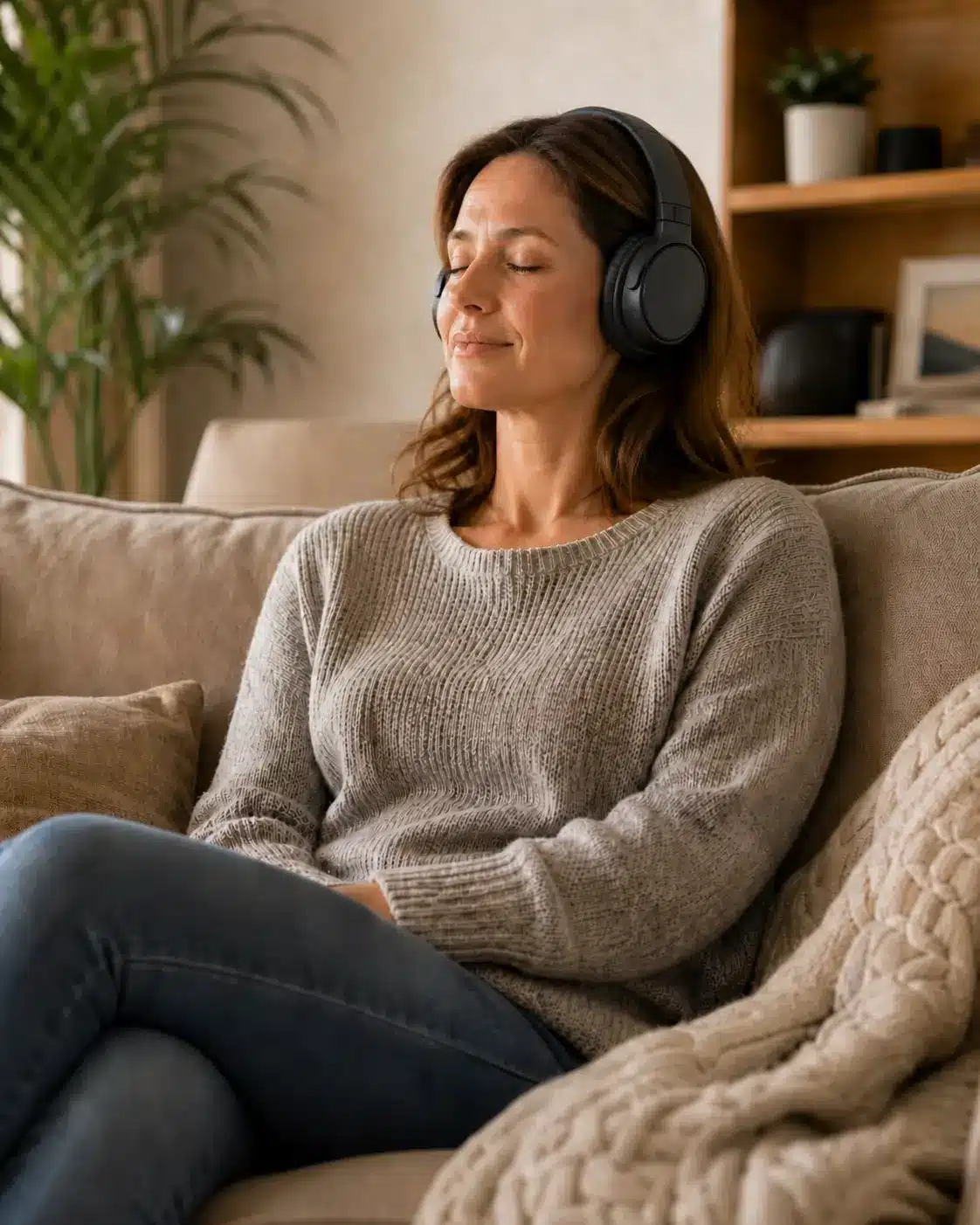
For whom can the Safe and Sound Protocol help?
Does your body still feel alert, tense or exhausted even at times when you should be resting? Step by step, the SSP helps your body experience more security, peace and recovery again.
- Anxiety & chronic stress
- PTSD & Complex PTSD (C-PTSD).
- ADHD - focus & emotional regulation
- Autism spectrum disorder (ASD)
- Sensory hypersensitivity
- Social anxiety
- Lung COVID / vagal dysautonomia
- ME/CFS & chronic fatigue
- Recovery from burnout
- Sleep disorders
- Children with behavioral problems
- Overalert or closed
The SSP is also used as basis for other therapies. When the nervous system experiences more peace and safety, more room for therapy often arises. EMDR, somatic work and cognitive behavioral therapy can therefore connect better. Many therapists employ the SSP in preparation or support to increase the ‘window of tolerance.
What clients say after listening
Client experiences from our practice, shared with permission.
“One of the first changes I noticed was in my thoughts. Even in the midst of an incredibly stressful period in my life, I could access more regulated, open and curious thoughts. Like there was space between a trigger and my reaction. That pause was a gift. The SSP helped me emerge from a long-term frozen state that had affected my relationships for 17 years. I was able to be present and emotionally connected in a way I hadn't experienced in almost two decades.”
“It is as if I have entered a rich honey pot with the Core program. I am experiencing how long-term inner cramping is noticeably releasing. The depression I had been struggling with for years has almost completely disappeared. I sleep better, wake up rested - which hadn't happened for over 6 years. I actually feel calm. Not just calm.”
“It has made a world of difference. For me, for my partner and even for our dog. I notice that I am more at ease with others - that really wasn't possible before. In addition to the fear, there is now safety. That makes it healing. Your support for the highly sensitive client was just right.”
How the Safe and Sound Protocol works
The SSP works differently than talk therapy. It works directly on the brain stem, the oldest part of your brain. Talking is not necessary. Understanding is not necessary. All you have to do is listen.
-
Specially filtered music reaches your middle ear The SSP uses proprietary music, edited to emphasize frequencies between 500-4,000 Hz. This is exactly the range of a quiet human voice. The reassurance of someone who trusts you and makes you feel safe.
-
Your middle ear muscles get a workout The stapedius and tensor tympani muscles in your middle ear are the remote control of your nervous system. The SSP trains them to distinguish safety from danger at lightning speed.
-
The vagus nerve receives a safety signal Through the brainstem, the trained middle ear muscles activate the ventral vagal complex.This is the most evolved branch of the vagus nerve, associated with social connection, learning and rest.
-
Your autonomic nervous system shifts Your heart rate variability may increase. The Social Engagement System awakens. The chronic background hum of fight-or-flight mode becomes quieter. Not by willpower, but by biology.
Why ‘bottom-up’ changes everything
When your nervous system is in defense mode, the prefrontal cortex (your center of insight, language and reasoning) goes partially offline. Conversational therapy cannot fully reach you then. The SSP helps your system relax first. Only then is it open to real change.
From protection to connection
The SSP doesn't just train rest. It also restores your ability to feel safe on others.
Dr. Stephen Porges discovered that our nervous system receives and transmits social security through six linked functions - from our facial expression to the way we hear voices. He called this the Social Engagement System (Social Engagement System).
With chronic stress, trauma or overstimulation, this system becomes suppressed. Social situations take an enormous amount of energy. Eye contact feels overwhelming. You have difficulty regulating yourself in front of others - even when you want to.
The SSP uses filtered vocal music to train the middle ear muscles. These are the muscles you need to distinguish human voices from background noise. As those muscles get stronger, your nervous system automatically activates the broader Social Engagement System. Not through exercise,but through biology.
- You understand voices and emotions of others more easily
- Social situations cost less energy
- You feel safer with others and within yourself
- Eye contact becomes less overwhelming
- You can better co-regulate yourself with the people around you
- Conversations are more natural, less masking, more present
The three SSP pathways
SSP Connect
A gentle introduction with unfiltered music that prepares your nervous system for what follows. Ideal if you are highly sensitive or want to start extra gently.
~1 hour - Optional but recommendedSSP Core
The core of the program. Gradually filtered music trains your middle ear muscles step by step. This is where the fundamental shift occurs.
~5 hours - Spread over days or weeksSSP Balance
Integration Phase. Lighter filtering preserves and deepens Core's results. You can always return to it when life places new demands on your system.
Ongoing - As neededThe ‘Day 4 effect’: what we learned
Around day 4 of SSP Core, we sometimes see a brief period of increased sensitivity. This is not a setback. It is your auditory system recalibrating itself. Two days later, most clients report the deepest calm they have felt in years. We prepare each client for this in advance.
A soft approach with broad impact
Patented music listening. Not only to become calmer, but also to experience more safety and regulation....
Senses
- Reducing sound sensitivities
- Improve auditory processing
- Improve stimulus processing
Behavior & emotion
- Improve behavioral regulation
- Managing emotions better
- Being able to relax more deeply
Connection
- Becoming more socially competent
- Connecting better with yourself
- Better contact with others
Safety
- Supporting your neuroception
- Feeling safer from the inside out
- Resting the body and mind
Energy & recovery
- Sleep better
- More energy during the day
- Less chronic fatigue
Synergy
- EMDR and somatic amplification
- Increase therapy readiness
- HRV and heart coherence
What actually happens when people listen
These are not surveys. They are validated clinical outcomes measured on clients who have completed the Safe and Sound Protocol.
The numbers behind the change
Anxiety decreased an average of 6.0 points on the GAD-7 (from 14.6 → 8.6). Trauma symptoms improved by 16.3 points on the PCL-5 (from 45.4 → 29.2). Depression decreased 5.5 points on the PHQ-9 (from 15.3 → 9.8). More than half of the clients in the clinical range moved to the non-clinical range. The U.S. Department of Defense awarded nearly $3.8 million in 2024 for a double-blind RCT on the SSP in PTSD. Individual results may vary.
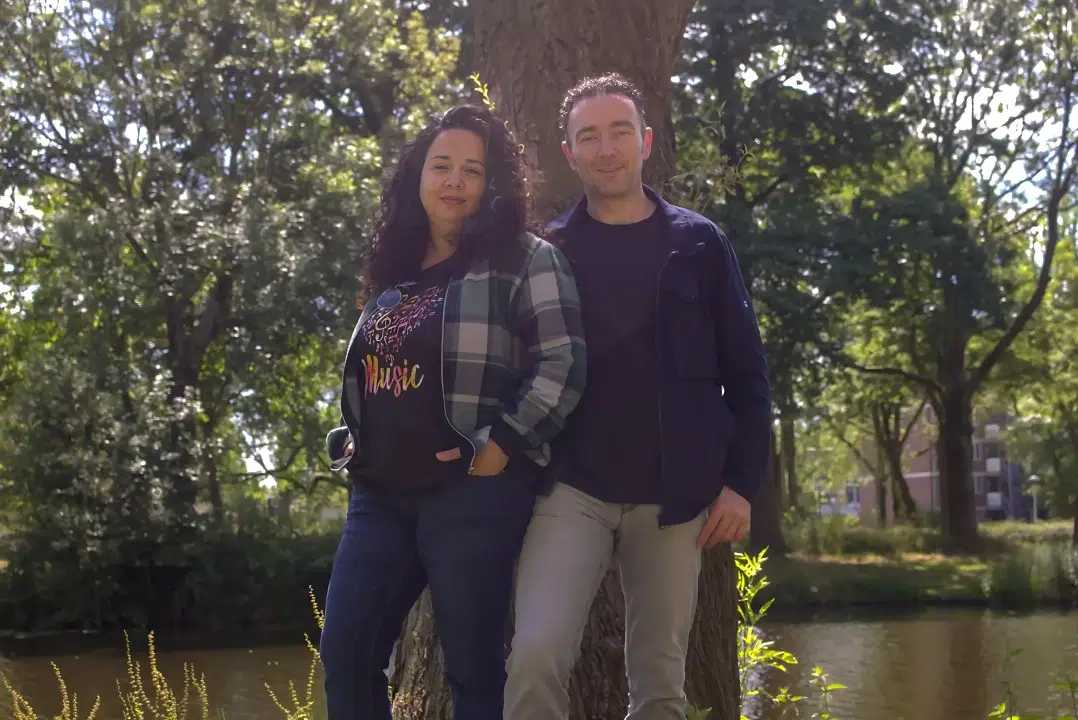
More than 1,100 programs. A wealth of online experience.
-
Certified Unyte Health provider. Officially certified by Unyte/iLs. This is the organization working with Dr. Stephen Porges to offer the protocol worldwide.
-
GZ psychologist clinical supervision (BIG-registered) Shahera el Katib (BIG: 89919609425) oversees each pathway. Your program follows clinical standards.
-
Online experience and mental health background - since 2010 With 14 years of experience and over 5 years of online SSP guidance, you'll work with refined knowledge of what sensitive nervous systems really need.
-
Personalized intake - always, for every client We read each intake form personally. Based on that, we determine your starting time, the sequence of phases and the frequency of support.
Your home is your safest environment. Our entire protocol is built around that.
What happens after you sign up?
- You sign upYou will receive immediate confirmation and access to the next step.
- You will receive our intake formComplete it at your convenience. No rush, no deadline.
- We set up your personal listening scheduleBased on your intake, we draw up a personal schedule: starting duration, phase sequence and specific points of interest for your nervous system.
- You download the free Unyte appAvailable on phone, tablet or laptop. Ordinary over the ear headphones are otherwise all you need.
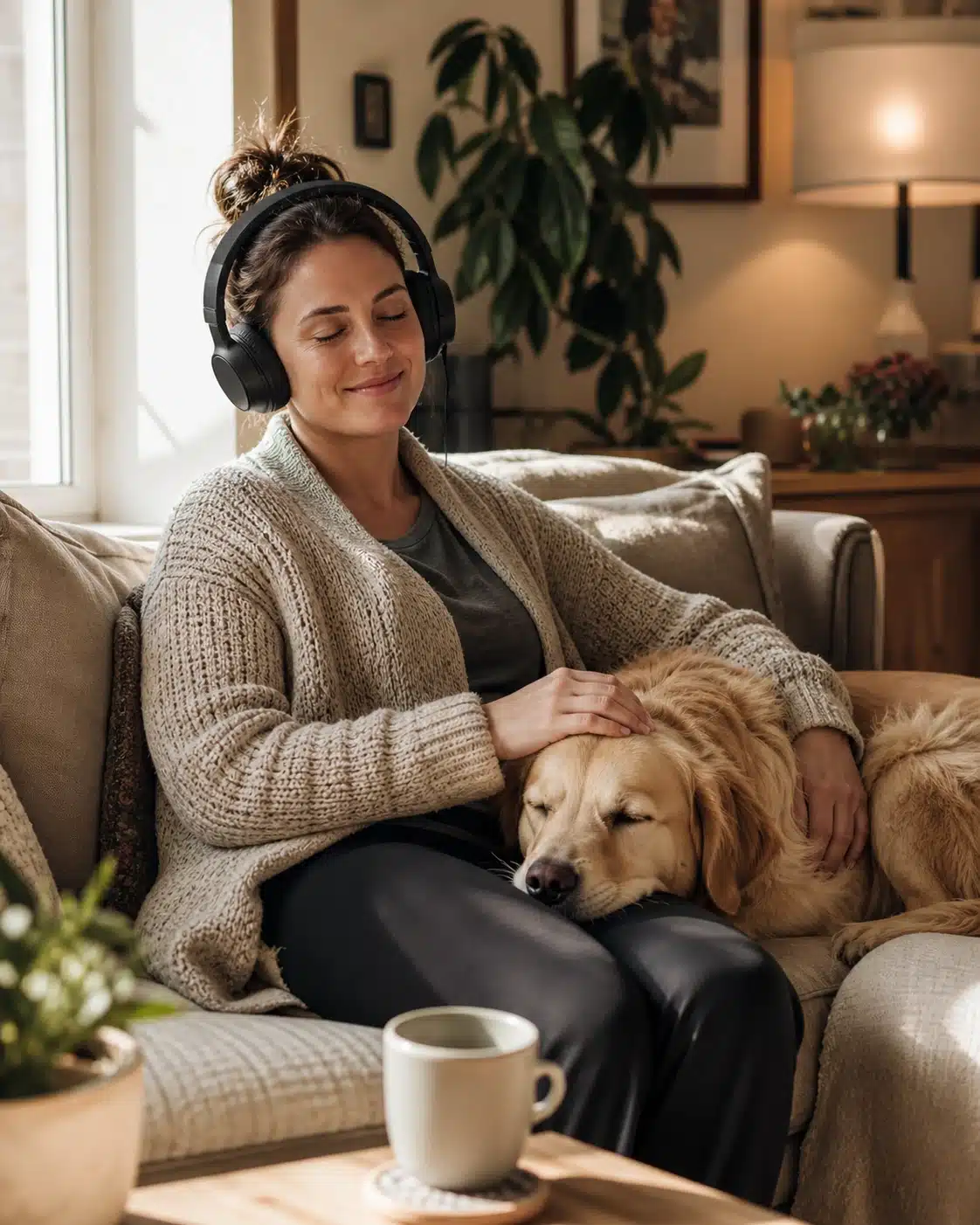
- You listen at home, at your own paceOn your own couch, in your familiar space. No camera. No set times.
- You share (optionally) a short messageAfter sessions, you can write to us what you notice. Totally optional, but always welcome.
- We respond and adjust as neededWritten, professional and available when you need it. For the full 12 months.
- Microdosing protocol We never start with an hour. Depending on your intake, your first session may take 10 seconds. Going slow is always faster when working with the nervous system.
- Written support - no monitoring No monitoring via video. Asynchronous, professional and available. Without the pressure of a camera or mandatory appointments.
- Depth through repetition With 12 months of access, you can repeat the program several times. Lasting changes take time and each round deepens the effect.
How we do things differently
Most SSP providers work with single sessions and consultation fees. We deliberately chose a different model. Nervous system repair requires time and repetition. A handful of sessions is not enough for that.
| Aspect | Session-based offerings | SSP at SoundTherapy |
|---|---|---|
| Intake | Mostly focused on general history | Comprehensive written intake - tailored to nervous system and sensitivity |
| Protocol | Standard for all | Microdosing, tailored to your system |
| Support | Only during sessions | Written support for 12 months |
| Video required | Often | Not - based on autonomy |
| Surroundings | Clinical room or fixed videocall | Your home - your own safe place |
| Model | Billing per session | One price, 12 months of access |
When toppers discover the SSP
Not everyone who comes to us is in crisis. A growing proportion of our clients are executives, athletes and professionals. Who perform brilliantly under pressure, but can no longer relax well at home. The SSP trains the ability to switch smoothly between activation and true rest. In elite sports, this Autonomic Agility mentioned. Not a relaxation technique. A performance skill.
All included. One price. One year.
No hidden fees. No separate sessions. Just you, the music and enough time.
* Cancel can be done while the music has not yet started.
After your registration, you will receive a personal intake form. Based on that, we will set up your schedule. You download the Unyte app and start whenever you're ready. Just at home, with ordinary headphones. During 12 months you can go through the protocol as many times as your system wants. Each round deepens the effect.
Maybe this is your moment.
You don't have to do anything. Just listening is enough.
Sign up and receive your personal intake form. Fill it out when you are ready. No rush. No pressure. We'll take it from there.
€250 · £250 · $300
✓ Cancel within 14 days - as long as the music has not yet started
What clients of SoundTherapy say
Experiences of people who have gone through their journey with us. Shared with permission.
“After already three hours of listening, I saw significant improvements in my son. He is softer, calmer and now remembers where he put his things. Within four weeks he started asking for hugs - something that never happened before. The occupational therapist was so impressed that she wants to learn more about SSP herself.”
“I noticed I no longer had sweaty palms, no queasy feeling in my stomach. My friend called me ‘a different person.’ At work, on public transportation, in restaurants. The anxiety was just gone.”
“Everyone with ME/CFS should know about this. I noticed smaller details around me more intensely - a kind of curiosity I had lost for years. After being almost completely bedridden, I can move again: chi-gong, some yoga. My nervous system is noticeably improved. It brings me back to life.”
“After a while, our son's teacher noticed that he entered the classroom without that slight tension that was always there. He was better able to focus on his work and also get it done - something that had previously been associated with a lot of tension. His self-confidence grew. His motor skills also became smoother. We didn't expect this, but it was undeniable.”
Answers to your questions
What is the Safe and Sound Protocol?
The Safe and Sound Protocol (SSP) is a 5-hour listening therapy developed by Dr. Stephen Porges, based on his Polyvagal Theory. It uses specially filtered music to train the middle ear muscles, stimulate the vagus nerve and provide the nervous system with step-by-step greater calm, security and resilience.
You can do it completely at home, at your own pace, spread over as many days as your nervous system needs.
How does the SSP actually stimulate the vagus nerve?
The SSP filters music to emphasize the frequency range of the human voice (500-4,000 Hz). This challenges the middle ear muscles (the stapedius and tensor tympani) to actively tune, which sends a signal through the brainstem to the ventral vagal complex. This is the ‘safety’ branch of the vagus nerve.
Think of it as physical therapy for the switch of your nervous system. All you have to do is listen. Your biology does the rest.
Who is the Safe and Sound Protocol intended for?
The SSP is used in adults, adolescents and children with anxiety, PTSD, C-PTSS, ADHD, autism spectrum disorders, sensory hypersensitivity, social anxiety, burnout, Long COVID, sleep disorders and chronic stress.
Trauma processing requires adequate security in the nervous system. The SSP can help strengthen that base so that EMDR, somatic therapy and other interventions can be better tolerated and integrated.
Is it safe to do the SSP remotely, without personal supervision?
Yes. For many clients, the home environment is even more pleasant therapeutically. You don't have to ‘feign calm’ for a therapist. You are in your own space, with your own anchors, without the social demands of a clinical setting.We always recommend listening with another safe person or pet when possible. The safer and relaxed you feel while listening the better.
Our protocol includes: a comprehensive written intake, a personalized listening schedule, written support throughout the course. We have refined this system based on more than 1,100 online trajectories. We can also advise you at any time to make your listening conditions as safe and pleasant as possible.
What is included in €250?
For €250 you get 12 months of full access to all three SSP tracks (Connect, Core and Balance) in all available music versions via the Unyte app. Includes personal written intake, your customized listening schedule, written guidance for 12 months, and our bonus course Polyvagal (completely optional).
No hidden costs. You can listen once or repeat the protocol several times a year.
How long does it take before I notice results?
Many clients notice something after only the first few sessions. Consider a subtle change in energy, sleep quality or emotional responses. Practice data show that 85% of clients report improvement in anxiety symptoms after completing the 5-hour Core program.
The effect is cumulative: each time you go through the protocol, you build on the previous time.
What if I am highly sensitive or found the SSP too intense before?
This is exactly our specialty. During the intake we chart the starting tolerance of your nervous system. For highly sensitive clients, we sometimes start with 10-second sessions.
Our Micro-Dosing Protocol, developed from more than 200 highly sensitive pathways, allows the nervous system to adapt at its own pace. Going slow is always faster when it comes to the nervous system.
Is the Safe and Sound Protocol evidence-based?
Yes. The SSP is based on more than 40 years of peer-reviewed research in autonomic neuroscience by Dr. Stephen Porges. Practice results (Unyte/iLs, 2024): 85% of 752 clients less anxiety; 87% of 390 clients improvement in trauma symptoms; 81% of 543 clients less depression. All percentages reflect self-reported improvements.
Can I cancel within 14 days?
Yes. As long as the music hasn't started yet, you can cancel your purchase within 14 days and get your money back. Have you already completed the intake but haven't started the music yet? Then the reflection period still applies. Do you have questions about this? Feel free to send us a message.
What headphones do I need?
Always use a over-ear stereo headphones. In-ear earbuds and earbuds are not suitable. Wireless or wired does not matter. Noise canceling headphones (ANC) are allowed, provided you turn the noise reduction off completely during the session.
Can I combine the SSP with my ongoing therapy?
Yes, and in most cases it is actually beneficial. Many therapists put the SSP in preparation for or in addition to EMDR, somatic therapy or CBT. The SSP helps to bring the nervous system into a state where other interventions land better. We always pay extra attention to this during your intake, to adjust your listening plan accordingly.
What if I skip a day or can't sustain it for a while?
No problem. That's exactly why you have 12 months of access and why you have guidance. Send us a message if you get stuck. We'll adjust your schedule and make sure your trajectory feels good. Even if it's slower than expected.
Is the SSP safe for my child?
Yes, the SSP is widely used with children. Consider ASD, ADHD, sensory hypersensitivity and attachment problems. Practice results show that 84% of children showed psychosocial improvement. For children, we establish a modified protocol with shorter sessions and step-by-step structure. Parents receive instructions on how to supervise listening sessions in a relaxed manner.
Ready to get started?
Your nervous system is not asking for more willpower. It is asking for peace and security.
Sign up and complete your intake at your pace. After that, we take over. Twelve months of written supervision by a GZ psychologist.
€250 · £250 · $300
✓ Cancel within 14 days - as long as the music has not yet started
The Safe and Sound Protocol:
From brain stem to gene expression
A comprehensive scientific analysis: from the evolutionary architecture of the vagus nerve to the latest insights on trauma, immune system and epigenetics. Based on peer-reviewed research and more than 1,100 clinical pathways.
Nine chapters. Thirty-one peer-reviewed sources. Seven documented case studies.
✿ Transparency and diligence
A few things we think are important to tell you in advance.
No medical treatment
The Safe and Sound Protocol is a supervised listening program. Not a medical treatment. It does not replace care from a doctor, psychologist or therapist. Many people use it in addition to professional care - and that's what it's for.
When to contact first?
For acute crisis, psychosis, active suicidal thoughts, untreated epilepsy, severe dissociation or an unsafe home situation. Please contact us before applying. Together we will see what is appropriate.
You always get your money back immediately if the intake shows that the SSP does not suit you.
For sensitive people
We start extra quietly. Shorter sessions, more breaks, slower build-up. With us, your pace is part of the coaching. There is no schedule you have to meet. Having doubts? Send us a short message. You'll get honest advice, with no pressure.
Experiences are personal
The stories on this page come from our own clients, shared with permission. All names have been changed for privacy. Experiences may sometimes be different, each nervous system is unique.
Having doubts? Send us your situation → We listen, think with you, and give honest advice.
Scientific references & sources
The Safe and Sound Protocol is based on peer-reviewed neuroscience. The sources below substantiate the claims and clinical rationale on this page.
Polyvagal theory - Fundamental research
- Porges, S.W. (1994). Orienting in a defensive world: Polyvagal Theory. Psychophysiology, 32(4), 301-318. polyvagalinstitute.org
- Porges, S.W. (2011). The Polyvagal Theory. Norton & Company.
- Porges, S.W., Bailey, R., & Dugard, J. (2023). Reconciliation: replacing the Stockholm syndrome as the definition of a survival strategy. European Journal of Psychotraumatology, 14(1). tandfonline.com
- Polyvagal theory: current status, clinical applications and future directions. PMC / PubMed Central, 2025. pmc.ncbi.nlm.nih.gov
- Polyvagal theory: a journey from physiological observation to neural innervation. Frontiers in Behavioral Neuroscience, 2025. frontiersin.org
SSP - Clinical & scientific basis
- Neurophysiological background of the Safe & Sound Protocol. Unyte. SSPScience.pdf
- Safe and Sound Protocol: A practical application of polyvagal theory. Action Trauma. actiontrauma.com
- Using non-invasive vagal neuromodulation: HRV biofeedback and SSP. Spandidos Publications, 2025. spandidos-publications.com
- Unyte / iLs Practice Results Report (2024). GAD-7, PHQ-9, PCL-5, PSC. integratedlistening.com
Psychoneuroimmunology & Epigenetics
- From molecules to meaning: neuropeptides, sociostasis and the brain-heart axis. MDPI, 2026. mdpi.com
- Epigenetics and psychoneuroimmunology: mechanisms and models. PMC / NIH. pmc.ncbi.nlm.nih.gov
- HRV biofeedback and SSP for cardiovascular and autonomic regulation. PMC, 2025. pmc.ncbi.nlm.nih.gov
Validated clinical measurement instruments
- GAD-7: Spitzer, R.L. et al. (2006). A brief measure for assessing generalized anxiety disorder. Archives of Internal Medicine, 166(10), 1092–1097.
- PHQ-9: Kroenke, K., Spitzer, R.L., & Williams, J.B.W. (2001). The PHQ-9: validity of a brief measure of depression. Journal of General Internal Medicine, 16(9), 606–613.
- PCL-5: Weathers, F.W. et al. (2013). PTSD checklist for DSM-5. National Center for PTSD.
- PSC: Jellinek, M.S. et al. (1988). Use of the Pediatric Symptom Checklist for screening. Archives of Pediatrics & Adolescent Medicine, 142(10), 1110–1116.
Scientific references are listed for information and transparency of the clinical rationale on this page.