
More peace. More recovery. More connection with your body.
A guided listening program for people whose bodies don't know how to relax anymore. At home, at your pace, with personal guidance.

Your mind has known for a long time that you're safe. But your body hasn't received that message yet. RRP helps your body feel safe. It helps you relax and supports your body's ability to heal.
✓ If you change your mind within 14 days, you'll get your money back.
Maybe this sounds familiar to you
RRP is used by people who have tried many things and are still looking for that one deeper layer. Many of them recognize this:
These aren’t signs of weakness. They’re signals from a nervous system that has been in survival mode for so long that it has forgotten how to relax. The RRP helps your body remember that. Take it easy. At your own pace.
What the study shows
In June 2026, a clinical study from the University of Florida was published on Sonic Augmentation Technology™—the sound technology also used in the RRP. 113 adults listened for fifteen minutes on a single occasion. This was measured immediately before and immediately after listening:
Dale et al. (2026), Frontiers in Psychiatry. N = 113 adults; oxytocin measured in 33 participants. One 15-minute session, not the full RRP program. From our experience, we know that the longer people listen, the more they come to experience. A detailed explanation and limitations are provided further down this page.
In addition, Unyte collected early pilot data on the RRP program itself—self-reported, based on small samples, and therefore to be interpreted with caution:
Early pilot data from Unyte (2024), self-reported. Sample sizes are limited; methodological context is provided below. Individual results may vary.
“My sleep gradually changed. After a few weeks, my sleep became more restful. I woke up less often and felt more present in the morning.’
— Thomas R., sleep · recovery“There are small changes that run very deep. There’s more space inside. I can now look hard truths straight in the face without falling apart.”
— Annet K., resilienceMaybe now is the time
You don't have to force anything. Just getting started is enough. After you sign up, you'll receive a personalized intake form—you can fill it out whenever you're ready.
✓ Personal intake session included · ✓ 14-day money-back guarantee · Remote coaching, no scheduled video sessions
Would you like to learn more first?
Below, you can read about exactly what RRP is, how it works, how it differs from SSP, what the research does and does not show, who will guide you, and answers to the most frequently asked questions.
↓What is the RRP?
You listen. Your body understands the rest by itself.
The Rest and Restore Protocol (RRP) is a guided listening program from Unyte, developed based on the work of Dr. Stephen Porges. You listen to specially designed music and rhythms at home. Through your nervous system, this music sends a sense of deeper safety and calm. You don’t have to say anything, recall anything, or perform in any way. You simply listen.
Most forms of help require something from you: talking, thinking, analyzing, or practicing. The RRP requires nothing. You listen, your nervous system receives the signal, and the change begins without you having to do anything.
Your nervous system is constantly, unconsciously, picking up signals of safety or threat. Dr. Porges called that neuroception. The RRP sends signals of safety at precisely that subconscious level. That's why you don't have to think about it.
“Stealth meditation.”
Dr. Porges also refers to RRP as ‘stealth meditation’—hidden meditation. The program affects your nervous system without you having to control it. You don’t have to learn anything or do anything right. That’s exactly what gives many people such a sense of relief.
That passive nature is also what caught researchers' attention: in the 2026 study, the technology was described as a listening experience that requires no attention or active participation from the user. There is nothing to do right or wrong .
The operation
How does the RRP work?
RRP isn't a relaxation app, but a guided listening program based on decades of research into the nervous system. All you have to do is listen. The music does the rest.
Music that understands your nervous system
Featuring Sonocea® Sonic Augmentation Technology, developed by audio innovator Anthony Gorry in collaboration with Dr. Porges. The composition follows endogenous biological rhythms: breathing, heart rate, vascular rhythm, and the slow waves of your digestion.
Deliberately “off the grid”
Unlike conventional music, it has no fixed time signature, no fixed tempo, and no fixed key. The tempo ranges from 50 to 80 beats per minute, and the frequencies vary from 20 to 5,000 Hz. As a result, there’s nothing to predict—and your attention doesn’t have to linger on anything.
From your head to your body
The RRP focuses on the connection between the abdomen and the brain—your digestion, heart rate, and the tension in your diaphragm. This ability to sense your body from the inside is called interoception, and it is often disrupted by chronic stress.
More space, less defense
A nervous system at rest is no longer on the defensive. Space opens up: to feel without being overwhelmed by it, to recover, and to respond differently than you’re used to.
What words do not achieve
Some experiences run deeper than language. Your body stored them long before you had words for them. RRP works on that level—not through conversation or insight, but through rhythm and sound.
No exercise, no breathing instructions
The sounds do not control your breathing or force your body to do anything. There are no set tempos you have to follow. You just need to listen at a volume that’s comfortable for you.
RRP versus SSP
What is the difference between RRP and SSP?
Both programs were developed by Unyte and based on Dr. Stephen Porges' polyvagal theory. They work on the same nervous system, but each addresses a different layer.
| Aspect | SSP - Safe and Sound Protocol | RRP - Rest and Restore Protocol |
|---|---|---|
| Primary focus | Safety, voice frequencies, social contact | Rest, rhythm, body awareness and recovery |
| Commonly used for | Over-stimulation, trauma, social tension | Sleep, exhaustion, downtime, chronic complaints |
| How it feels | Active, conscious, sometimes more intense | Quiet, deep, restorative |
| Music | Filtered, patented music | Rhythmic, body-oriented, patented music |
| Use together? | Yes. Many people use both at different times. | |
The three modes of the nervous system
A resilient system moves smoothly between these states. Prolonged stress or trauma can cause this system to become stuck. The RRP helps restore that flexibility.
Security & connection
You feel calm, present, and connected. You can learn, heal, and make genuine connections. This is where the RRP ultimately guides your nervous system.
Action & survival
Your body is primed for action: increased heart rate, muscle tension, constant alertness. This is useful in a real emergency, but being in this state chronically drains your energy.
Closure or deep recovery
When under threat: fatigue, apathy, and a loss of vitality. When safe, however, deep rest, sleep, and cellular recovery. The RRP focuses primarily on restoring this restorative aspect.
Who accompanies you
Provided online support to more than 1,100 clients, offering personalized assistance from start to finish
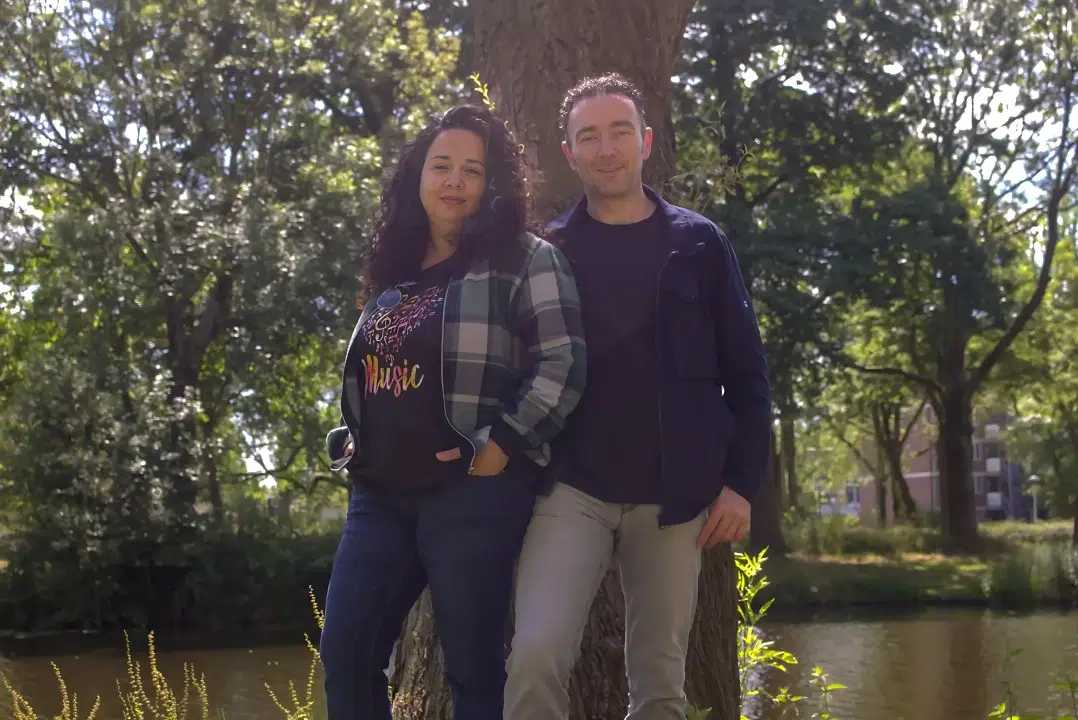
Shahera el Katib (health psychologist, BIG-registered) and William Bolle (RRP/SSP therapist, Unyte-certified).
- Certified Unyte provider — officially certified by Unyte, which develops RRP and SSP in collaboration with Dr. Stephen Porges.
- Clinical supervision by a mental health psychologist (BIG) — Each program is supervised by a licensed healthcare professional.
- Online counseling since 2010 — clients in the Netherlands, Germany, Belgium, the UK, and the U.S. No scheduled video sessions.
- Personal intake for everyone — We review every intake form ourselves and create each treatment plan individually.
- We are closely following the investigation — We read and process new publications, even when they challenge our own assumptions.
Many clients came to us after other methods hadn't helped enough. What motivated them to give it a try was that it didn't require a big commitment. Just listening.
The trajectory
Here's how it works
Once you've signed up, there's nothing else you need to do. We'll send you the intake form and guide you through the process step by step. No rush, no pressure, and no video calls to schedule.
You sign up
You'll receive your confirmation and access to the personal intake right away. You don't need to start listening just yet.
You complete a personal intake
We’ll ask you about your sleep, sensitivity, stress levels, and how your body feels. This helps us get to know your nervous system. There’s no deadline.
We create your listening schedule
Based on your initial assessment, we'll create a personalized schedule. Are you sensitive, or have you had strong reactions to stimuli in the past? If so, we'll start out extra carefully.
You listen at home through the app
Listen through headphones, earbuds, or a good speaker in a quiet environment. Keep the volume at a comfortable level: the softest passages should be just audible, and the loudest should never be overpowering. Always turn off sound adjustments such as extra bass, equalizer, or noise cancellation.
You get guidance when you need it
Do you have any questions, or are you having an unexpectedly strong reaction? Please contact us. We'll work with you to figure out what's going on and adjust the schedule as needed.
You build quietly
The goal isn't to finish as quickly as possible, but to give your nervous system the space it needs to truly change. Sometimes that means listening less and resting more.
Everything included. No surprises afterwards.
- 12 months of access to the RRP via the app
- Personal written intake
- Customized listening schedule
- Guidance on building
- Help with sensitivity or reactions
- Practical tips for daily practice
- Remote guidance, no fixed video sessions
- No pressure: get your money back within 14 days
No subscription, no recurring fees. One payment gives you twelve months of access to the program, the app, and the coaching. You’ll always see the exact amount clearly displayed before you check out. No fine print, no hidden fees.
For those who really want to know
The science behind RRP
Over the past few decades, a quiet shift has been taking place in mental health care. For a long time, the emphasis was on talk therapy and cognitive techniques: a top-down approach, moving from the mind to the body. In cases of chronic stress and trauma, these methods often reach a dead end when the body is still in survival mode.
That is why a complementary bottom-up Approach: First restore the physiological basis of safety, so that higher cognitive functions can then operate effectively. The RRP fits into this movement — it targets the nervous system directly, through sound and rhythm, without requiring you to understand, remember, or practice anything.
Peer-reviewed clinical research (2026)
On June 8, 2026, the trade journal published Frontiers in Psychiatry A clinical feasibility study of Sonic Augmentation Technology™ (SAT)—the sound technology also used in the RRP. The study was conducted by the Department of Psychiatry at the University of Florida (College of Medicine, Jacksonville), approved by their institutional review board, and pre-registered on ClinicalTrials.gov.
The Results
| Result | Improved participants | Average change |
|---|---|---|
| Overall physical and mental condition | 88,5% | 32.9 → 47.6 (significant effect) |
| Tension, anxiety, and feeling overwhelmed | 89,4% | 15.8 → 7.7 (significant effect) |
| Calm, steady breathing, body awareness | 77,0% | 18.7 → 25.3 (moderate effect) |
| Oxytocin in saliva (n = 33) | 72,7% | 17.7 → 18.6 pg/mL |
All differences were statistically significant (p < .001; oxytocin p = .001). The improvements were consistent across all four study groups—no group stood out or lagged behind.
The most striking finding: those who were the most anxious showed the greatest improvement
Nearly half of the participants (46%) scored above the clinical cutoff value on at least one of the measures of autonomic reactivity, anxiety, or depression prior to the study. It was precisely these participants who showed the greatest improvement.
This was most evident in the group with increased autonomic reactivity: they started at a lower level, but after fifteen minutes of listening, they reached a level that was no longer statistically different from that of the participants without increased reactivity. In practice, we see the same pattern: people whose nervous systems have been in survival mode the longest notice most clearly that something is shifting.
Oxytocin — Why It's Interesting
Oxytocin is a naturally occurring substance associated with calmness, connection, and recovery from stress. For the 33 participants who took part in person, saliva samples were collected before and after listening and analyzed by a researcher who was unaware of the study’s purpose. In nearly three-quarters of them, oxytocin levels had risen afterward. This is an objective, physiological measurement in addition to the questionnaires—exactly what sets this study apart from self-reporting alone. At the same time, this involves a small group and a modest increase; replication on a larger scale is needed.
What This Study Does and Does Not Show
We believe it’s more important for you to make a well-informed choice than to decide quickly. That’s why there are limitations, as the researchers themselves point out:
- The study one 15-minute session with the sound technology — not the full 12-month RRP program.
- This concerns immediate, short-term effects. Whether they remain in the memory or accumulate with repeated listening cannot be determined with this design.
- There was no suitable control group in the reported analysis; therefore, causal conclusions are not possible.
- Participants knew they would be listening to “soothing music,” which expectation effects may have caused. The researchers recommend avoiding that phrasing in future research.
- The questionnaire on physical and mental well-being is new and not yet formally validated.
- The sample was predominantly female (81%), which means the results do not necessarily apply to everyone.
- The theoretical mechanism of action was described in this study not tested — It remains a hypothesis that has yet to be confirmed.
In short: a serious, independently conducted, and promising initial indication—not conclusive evidence. The article is freely available, so you can read it for yourself:
Dale et al. (2026), Frontiers in Psychiatry — doi.org/10.3389/fpsyt.2026.1772405
Pilot data on the RRP program itself (Unyte, 2024)
In addition to the study mentioned above, Unyte collected data from participants who actually completed the RRP program. This data is of a different, less rigorous nature: it is self-reported, based on limited samples, and lacks a randomized controlled trial.
| Domain (measuring instrument) | Improvement | To subclinical |
|---|---|---|
| Generalized anxiety (GAD-7). | 93% | 67% (score < 10) |
| Trauma and PTSD symptoms. | 88% | 72% (score < 30) |
| Clinical depression (PHQ-9). | 82% | 68% (score < 10) |
| Insomnia (AIS) | 76% | 44% (score < 6) |
| Digestive and abdominal complaints (BBC) | >50% | substantial decrease |
How do you honestly read these numbers? The trend is consistently positive, and the effects are remarkably significant; however, there is not yet conclusive evidence for all situations. That is precisely why we use a personalized intake process, a gradual approach, and guidance that adapts to your needs.
Ongoing Independent Research — DoD Grant
In 2024, the U.S. Department of Defense received a grant of $3.8 million at The Ohio State University for large-scale, IRB-approved research on both SSP and RRP in veterans with post-traumatic stress. The fact that a major institutional body considers this method robust enough for substantial independent research speaks to the seriousness with which the method is viewed internationally.
Frequently Asked Questions
Your questions, answered
What is the Rest and Restore Protocol?
RRP is a guided audio program from Unyte, based on Dr. Stephen Porges’ polyvagal theory. You listen at home to specially designed music and rhythms that influence your autonomic nervous system and can help you achieve greater calm, recovery, and body awareness. You do it at home using an app, with a personalized schedule and guidance.
What is the difference between RRP and SSP?
The SSP works through vocal sounds and safety frequencies and focuses on social interaction and reducing overstimulation. The RRP works through calm, rhythm, and connecting with your body from within, focusing on deep physiological rest, sleep, and recovery. For many, the SSP feels more active, while the RRP feels calmer and gentler. Both can also be used together.
Is there any peer-reviewed research on the sound technology in the RRP?
Yes. On June 8, 2026, [name] published Frontiers in Psychiatry A clinical feasibility study by the University of Florida on Sonic Augmentation Technology™, the sound technology also used in the RRP. Among 113 adults, 88.5% reported improved physical and mental well-being after a single 15-minute passive listening session, and among the participants from whom saliva samples were collected (33 people), 72.7% showed an increase in oxytocin levels. Participants who initially scored above the clinical cutoff for stress, anxiety, or sadness showed the greatest improvement. What this study does not demonstrate: it tested a single fifteen-minute session, not a full RRP program, and it lacked a usable control group. The full explanation, including all limitations, is provided above on this page.
How soon will I notice a difference?
That varies greatly from person to person. Some people notice a difference during or right after a session—the 2026 study measured improvements immediately after fifteen minutes of listening. Others don’t notice anything until weeks later, and even then, often only indirectly: falling asleep more easily, feeling less irritable, and experiencing a greater sense of physical ease. There’s no specific pace you’re expected to follow. The schedule adapts to you, not the other way around.
What headphones or speakers do I need?
Both over-ear headphones and in-ear earbuds work well; a good speaker is also an option. Keep the volume at a comfortable level: the softest passages should be just audible, and the loudest should never be overpowering—exactly as instructed in the study. While listening, always turn off all sound adjustments (extra bass, equalizer, noise cancellation), as these can distort the rhythm and frequency structure.
Is RRP a medical treatment?
No. RRP is a guided listening program, not a medical treatment. It is not a substitute for care from your doctor, psychologist, or therapist, but it can be used effectively alongside such care.
What if I am very sensitive to stimuli?
Then we’ll start off extra gently: shorter sessions, more rest days, and a slower progression. We’ll tailor the schedule entirely to your needs. There’s no minimum and no threshold.
Should I talk about my past?
No. RRP is a listening program. You don't have to say anything, bring anything up, or discuss anything. Your body does the work; all you have to do is be present.
Can I combine RRP with therapy?
Yes. Many people use RRP as a supplement to therapy. A calmer and more stable nervous system often makes other forms of treatment more effective. Let your therapist know that you’re using it so you can coordinate your care effectively.
Is RRP suitable for children?
Yes. RRP can also be used with children. We tailor the schedule, session duration, and instructions entirely to the child’s age and situation. A separate intake session is always the starting point. Please note: the published study was conducted on adults aged 21 to 81.
What if I get emotional while listening?
Take a break or stop if it becomes too much. You don't have to push through anything. Get in touch if a reaction persists or if you're unsure how to interpret it. We'll work through it together and adjust the plan.
What happens after payment?
You'll immediately receive a confirmation and a link to your personal intake. You don't have to start right away. After the intake, we'll create your schedule and get in touch with you. Everything moves at your own pace.
What do we know scientifically about RRP?
There are currently three sources of evidence. First, peer-reviewed research on the underlying sound technology: the clinical study in Frontiers in Psychiatry (2026) among 113 adults, who reported immediate improvements in their perceived state as well as an increase in oxytocin. Second, early pilot data from Unyte (2024) on the program itself: promising, but self-reported and based on small sample sizes. Third, a large-scale independent study has been underway at The Ohio State University since 2024, funded with $3.8 million from the U.S. Department of Defense. What is still missing is a randomized controlled trial of the full RRP program over a longer period of time. We’d rather be transparent about this than promise more than we can deliver.
Is the science behind RRP uncontroversial?
As with any living scientific model, it is the subject of debate. In 2026, a group of researchers (Grossman et al.) published a critique in *Clinical Neuropsychiatry* of certain aspects of the polyvagal theory, particularly specific evolutionary and anatomical assumptions. The Polyvagal Institute and clinicians worldwide have responded extensively to this critique. The bottom line: Polyvagal Theory is currently the most clinically useful model for explaining what happens physiologically during chronic stress, dissociation, freezing, and recovery. What matters is whether people are helped—our experience, the early pilot data, and recent clinical research all point in the same direction.
Transparency and diligence
No medical treatment
The RRP is a guided listening program, not a medical treatment. It is not a substitute for care from a doctor, psychologist, or therapist, but is often used in conjunction with such care.
Research in Perspective
The study published in 2026 pertains to a single 15-minute listening session using the underlying audio technology, not the entire RRP program. It shows great promise, but there is no guarantee of results.
When to contact first?
In the event of an acute crisis, psychosis, active suicidal thoughts, untreated epilepsy, severe dissociation, or an unsafe home environment: please contact us first. We’ll work with you to determine the best course of action.
Do you have chronic tinnitus?
There are no known reports of any negative effects from RRP; in fact, Unyte reports occasional improvements. Still have doubts? Feel free to contact us.
Experiences are personal
The stories on this page come from our own clients and are shared with their permission. Names have been changed to protect privacy. How your nervous system responds is unique; others’ experiences do not guarantee a specific outcome.
Perhaps your body has needed this for a very long time
You don't have to prove anything. Just getting started is enough. You can listen at home, whenever it's convenient for you, with a personalized schedule and guidance available whenever you need it.
✓ Personal intake session included · ✓ 14-day money-back guarantee · ✓ 12 months of access and guidance