
More safety. More peace of mind. More of yourself.
The Safe and Sound Protocol (SSP) is a five-hour, non-invasive listening therapy that helps the nervous system, step by step, to experience greater calm, security, and balance—at home, at your own pace, with professional guidance.
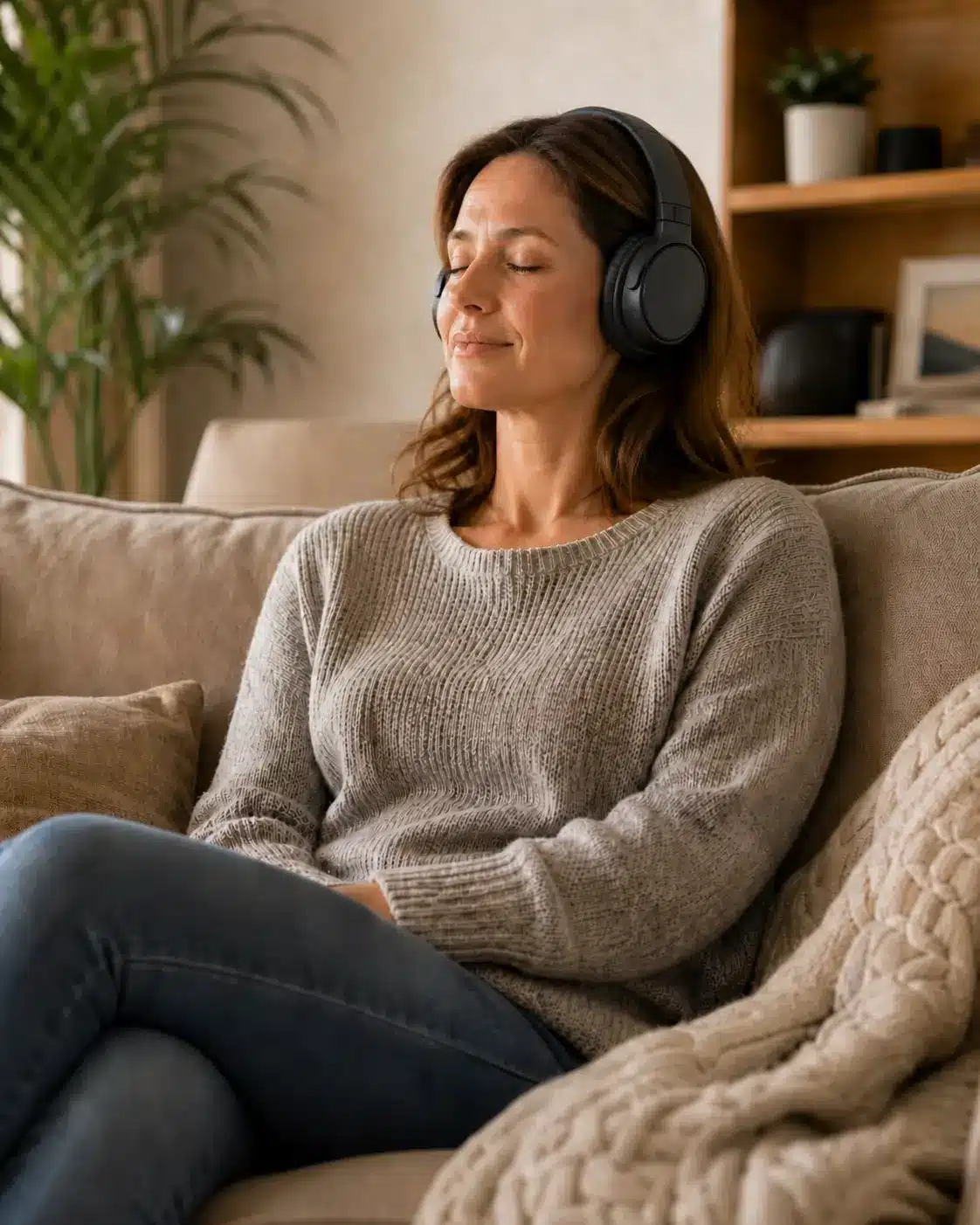
Find out how well-regulated your nervous system is and whether SSP is right for you.
What the SSP Can Support
Specially filtered music trains the middle ear muscles and stimulates the nervous system via the vagus nerve—not just temporarily, but as a lasting change.
Calm & Emotion
- Being able to relax more deeply
- Managing emotions better
- Less inner turmoil
Senses
- Less noise sensitivity
- Improved sensory processing
- Thinking More Clearly
Connection
- Feeling safer around others
- Becoming more socially competent
- Better contact with yourself
Energy & recovery
- Sleep better
- More energy during the day
- Less chronic fatigue
What Happens When People Listen
Source: Unyte / iLs real-world results (2024). Individual results may vary.
“I noticed that my palms weren’t sweaty anymore, and I didn’t feel nauseous. My boyfriend said I was ‘a different person.’ The anxiety was just gone.”
— Nathalie W., social anxiety“The depression I’ve been struggling with for years has almost completely disappeared. I sleep better and actually feel calm—not just pretending to be calm.”
— Sander B., depression / anxietyIs SSP right for your nervous system?
The first step is simple and non-binding. The free assessment determines how balanced your nervous system currently is and which program is right for you.
No obligation · ✓ Takes just a few minutes · ✓ Immediate insight into whether SSP is a good fit
Do you know enough already, and are you ready to get started?
Would you like to learn more first?
Below, you'll find a detailed explanation of how SSP works, the phases it consists of, the results you can expect, who will guide you, and answers to the most frequently asked questions.
↓Science
How the Safe and Sound Protocol works
SSP works differently from talk therapy. It acts directly on the brainstem, the oldest part of the brain. Talking isn't necessary, insight isn't necessary—just listening is enough.
Filtered music reaches the middle ear
The SSP uses patented music that has been processed to emphasize frequencies between 500–4,000 Hz: precisely the range of a calm human voice that signals safety.
The middle ear muscles get a workout
The stapedius and tensor tympani muscles act as the nervous system's remote control. The SSP trains them to distinguish between safety and danger at lightning speed.
The vagus nerve receives a safety signal
Through the brainstem, the trained middle ear muscles activate the ventral vagal complex—the most highly evolved branch of the vagus nerve, associated with rest, learning, and social connection.
The autonomic nervous system shifts
Heart rate variability may increase, the Social Engagement System is activated, and the chronic hum of the fight-or-flight response grows quieter. Not through willpower, but through biology.
Why ‘bottom-up’ changes everything
When the nervous system is in defense mode, the prefrontal cortex—the center of insight, language, and reasoning—partially shuts down. Talk therapy cannot fully reach you at that point. The SSP helps the system to relax first. Only then is it open to real change.
From protection to connection
The SSP not only cultivates calm, but also restores the ability to feel safe around others—the Social Engagement System.
- You understand voices and emotions of others more easily
- Social situations cost less energy
- You feel safer with others and within yourself
- Eye contact becomes less overwhelming
- You can better co-regulate yourself with the people around you
- Conversations flow more naturally—less pretense, more presence
The three SSP pathways
SSP Connect
A gentle introduction with unfiltered music that prepares the nervous system. Ideal if you’re highly sensitive or want to start off slowly.
SSP Core
The core of the program. Gradually filtered music trains the middle ear muscles step by step. This is where the fundamental shift takes place.
SSP Balance
The integration phase. Lighter filtering preserves and deepens the results of Core. You can always return to it when life presents new challenges.
From our clinical experience - more than 1,100 programs
The ‘Day 4 Effect’
Around day 4 of SSP Core, we sometimes see a brief period of increased sensitivity. This is not a setback—it’s the auditory system recalibrating itself. Two days later, most clients report feeling the deepest sense of calm they’ve experienced in years. Every client is prepared for this in advance.
A gentle approach with a broad impact
Senses
Reduce sensitivity to sound; improve auditory processing and sensory processing.
Behavior & emotion
Improve behavioral regulation, better manage emotions, and relax more deeply.
Connection
Improve your social skills and connect better with yourself and others.
Safety
Support neuroception, feel safer from within, and bring peace to your body and mind.
Energy & recovery
Better sleep, more energy during the day, less chronic fatigue.
Synergy
Strengthen EMDR and somatic work, increase readiness for therapy, and support HRV and cardiac coherence.
Clinical results
The numbers behind the change
Validated clinical outcomes, measured among clients who have completed the SSP program.
More than half of the clients in the clinical group moved to the non-clinical group. In 2024, the U.S. Department of Defense allocated nearly $3,8 million for a double-blind RCT on SSP in PTSD.
Source: Unyte / iLs real-world results (2024). Individual results may vary.
Who accompanies you
More than 1,100 programs. A wealth of online experience.
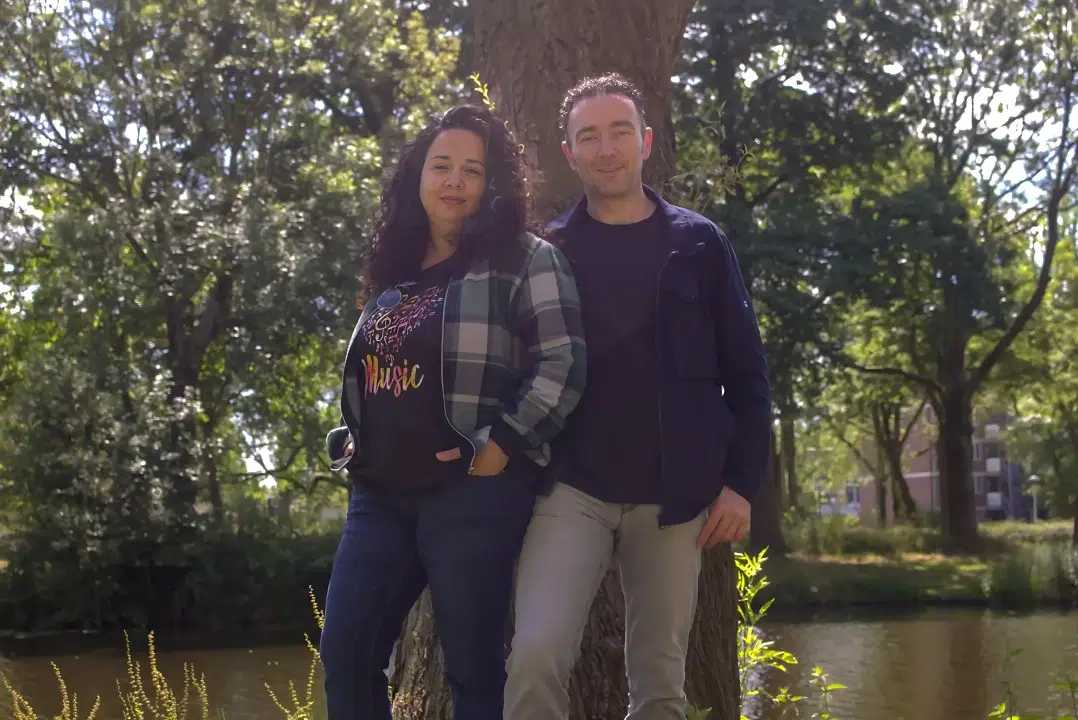
Shahera el Katib (mental health psychologist, BIG) and William Bolle (SSP/RRP therapist, Unyte-certified).
- Certified Unyte Health provider. — officially certified by Unyte/iLs, which collaborates with Dr. Stephen Porges.
- Clinical Supervision for Mental Health Psychologists (BIG) — Shahera el Katib oversees every step of the process in accordance with clinical standards.
- Online experience since 2010 — 14 years of experience and more than 5 years of online SSP coaching.
- Personal intake session for each client — Each intake form is reviewed individually; the duration of the initial phase, the sequence of phases, and the frequency are tailored accordingly.
Clients from the Netherlands, Belgium, Germany, the UK, the US, and beyond. A combination of clinical depth, human connection, and biological patience.
Our approach
Your home is your safest place
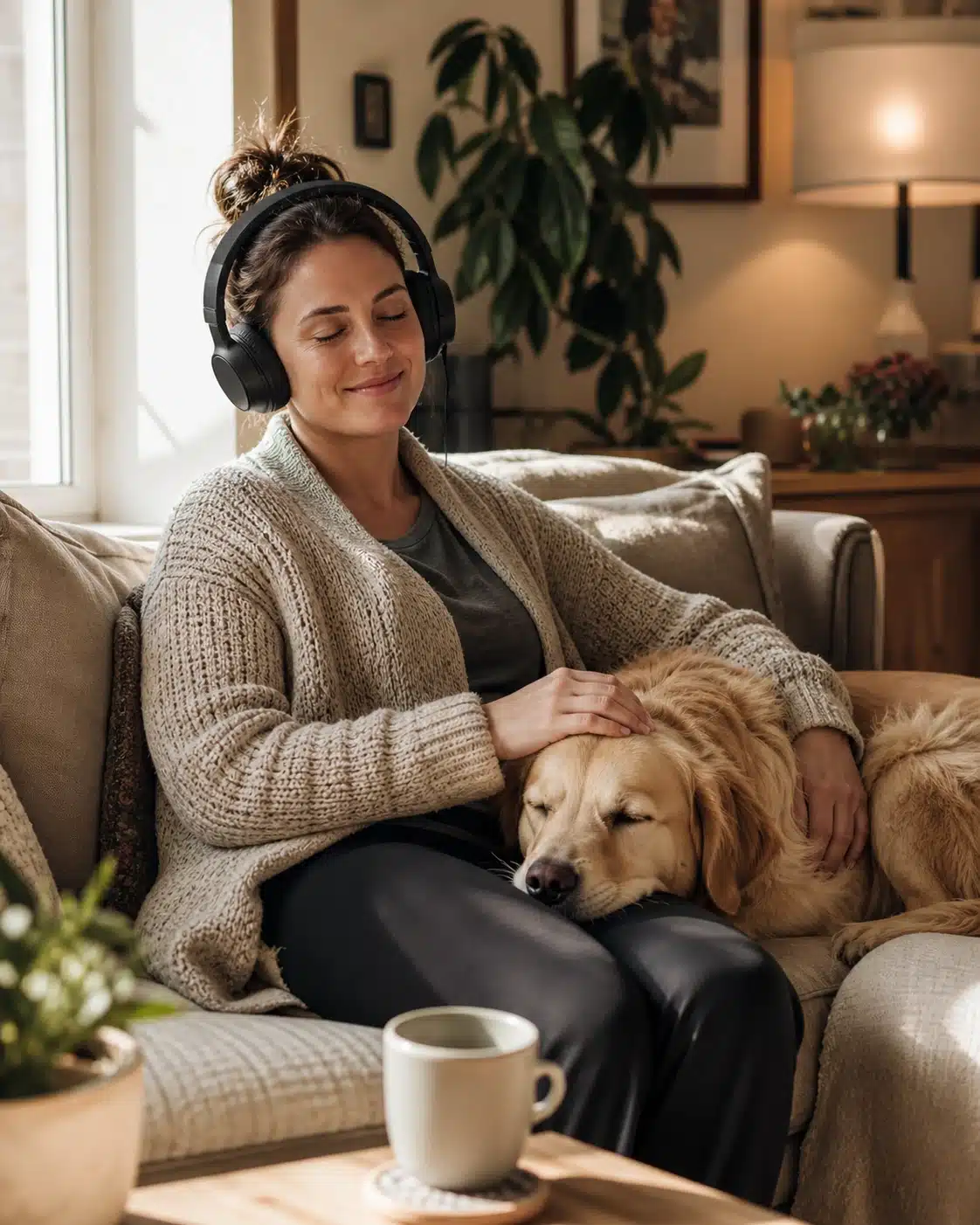
Your pet or another trusted person can be your best source of comfort—one person’s nervous system calms another’s.
You sign up
You will receive immediate confirmation and access to the next step.
You will receive the intake form
Complete it at your convenience. No rush, no deadline.
We'll set up your listening schedule
A personalized plan: duration of the warm-up, sequence of phases, and key considerations for your nervous system.
You listen at home, at your own pace
On your own couch, in your own comfortable space. No camera, no set times. A regular pair of over-ear headphones is all you need.
We provide support for 12 months
Professional and responsive, available whenever you need us—we'll adjust your schedule as needed.
How we do things differently
Most providers offer individual sessions and charge by the session. Restoring the nervous system takes time and repetition—a handful of sessions isn't enough for that.
| Aspect | Session-based offerings | SSP at SoundTherapy |
|---|---|---|
| Intake | General Background | Comprehensive intake assessment, tailored to the nervous system |
| Protocol | Standard for all | Microdosing, tailored to your system |
| Support | Only during sessions | Written guidance for 12 months |
| Video required | Often | Not - based on autonomy |
| Surroundings | Clinical room or video call | Your home — your own safe place |
| Model | Billing per session | One program, 12 months of access |
Frequently Asked Questions
Answers to your questions
What is the Safe and Sound Protocol?
A 5-hour listening therapy program developed by Dr. Stephen Porges based on his Polyvagal Theory. Specially filtered music trains the middle ear muscles and stimulates the vagus nerve, allowing the nervous system to gradually experience greater calm, safety, and resilience. You do it entirely at home, at your own pace.
Who is the SSP intended for?
For adults, adolescents, and children with conditions such as anxiety, PTSD, complex PTSD, ADHD, autism, sensory hypersensitivity, social anxiety, burnout, Long COVID, sleep disorders, and chronic stress. It can also strengthen the foundation so that EMDR, somatic therapy, and other interventions are more effective.
Is it safe to perform the SSP remotely?
Yes. For many clients, the home environment is actually a more comfortable setting for therapy—you don’t have to ‘pretend’ to be calm in front of a therapist. The protocol includes a comprehensive written intake, a personalized listening schedule, and written support throughout the entire process, refined based on more than 1,100 online sessions.
What's included with my registration?
12 months of full access to all three programs (Connect, Core, and Balance) via the Unyte app, including a personalized written intake, a customized listening schedule, written guidance for 12 months, and an optional Polyvagal bonus course. No hidden costs; you can repeat the protocol as many times as you like.
How long will it take before I see results?
Many clients notice a difference as early as the first few sessions—in their energy levels, sleep, or emotional responses. Clinical data show that 85% reports an improvement in anxiety symptoms after the Core program. The effect is cumulative: each round builds on the previous one.
What if I am highly sensitive or found the SSP too intense before?
This is exactly what we specialize in. During the intake, we assess your initial tolerance level. For highly sensitive clients, we sometimes start with 10-second sessions. Our microdosing protocol, developed based on more than 200 programs for highly sensitive individuals, allows the nervous system to adapt at its own pace.
What headphones do I need?
Over-ear stereo headphones. In-ear earbuds and earplugs are not suitable. It doesn't matter if they're wireless or wired. Active noise cancellation (ANC) is allowed, provided you turn it off completely during the session.
Can I combine the SSP with my ongoing therapy?
Yes, and it’s often even beneficial. Many therapists use SSP as preparation for or a supplement to EMDR, somatic therapy, or CBT. During the intake session, we’ll tailor your listening plan accordingly.
Can I cancel within 14 days?
Yes. As long as the music hasn't started yet, you can cancel within 14 days and get your money back—even if you've already filled out the intake form.
Is the SSP safe for my child?
Yes, the SSP is widely used with children (ASD, ADHD, sensory hypersensitivity, attachment issues). 84% of the children showed psychosocial improvement. We are developing a modified protocol with shorter sessions and provide parents with instructions on how to facilitate the sessions in a relaxed manner.
Transparency and diligence
No medical treatment
The SSP is a guided listening program, not a medical treatment. It is not a substitute for care from a doctor, psychologist, or therapist, but is often used in conjunction with such care.
When to contact first?
In the event of an acute crisis, psychosis, active suicidal thoughts, untreated epilepsy, severe dissociation, or an unsafe home environment: please contact us first. If the intake assessment shows that the SSP program is not a good fit, you will immediately receive a refund.
For sensitive people
We'll start off extra gently: shorter sessions, more breaks, and a slower progression. Your pace is part of the guidance—there's no schedule you have to stick to.
Experiences are personal
The stories on this page come from our own clients and are shared with their permission. Names have been changed to protect privacy. Every nervous system is unique; experiences may vary.
Maybe this is your moment
You don't have to do anything—just listen. Sign up and receive your personalized intake form. Fill it out when you're ready; we'll take it from there.
✓ Personal intake session included · ✓ Clinical supervision · ✓ 12 months of guidance · ✓ 14-day cooling-off period